Four generations between Norway and the Saguenay.
Since 2015, the same family, the same hand-painted chalet, and a conviction that has never changed: the motifs we paint by hand matter just as much as the dogs we raise.
It all began with a painted wooden trunk, carried over from Telemark.
In 1962, my great-grandmother Solveig Lindqvist left Telemark, Norway, to settle in the Saguenay with her husband. In her trunk: a few brushes, some pigments, and the tradition of rosemaling — the art of painting interlacing floral motifs on wood, passed down for generations in her home region.
She painted her first trunk here, on the shores of the fjord, the winter after she arrived. Her daughter learned at her side. Then I, Ingrid, learned from my mother — at the very same table, in the same smell of resin and oil paint.
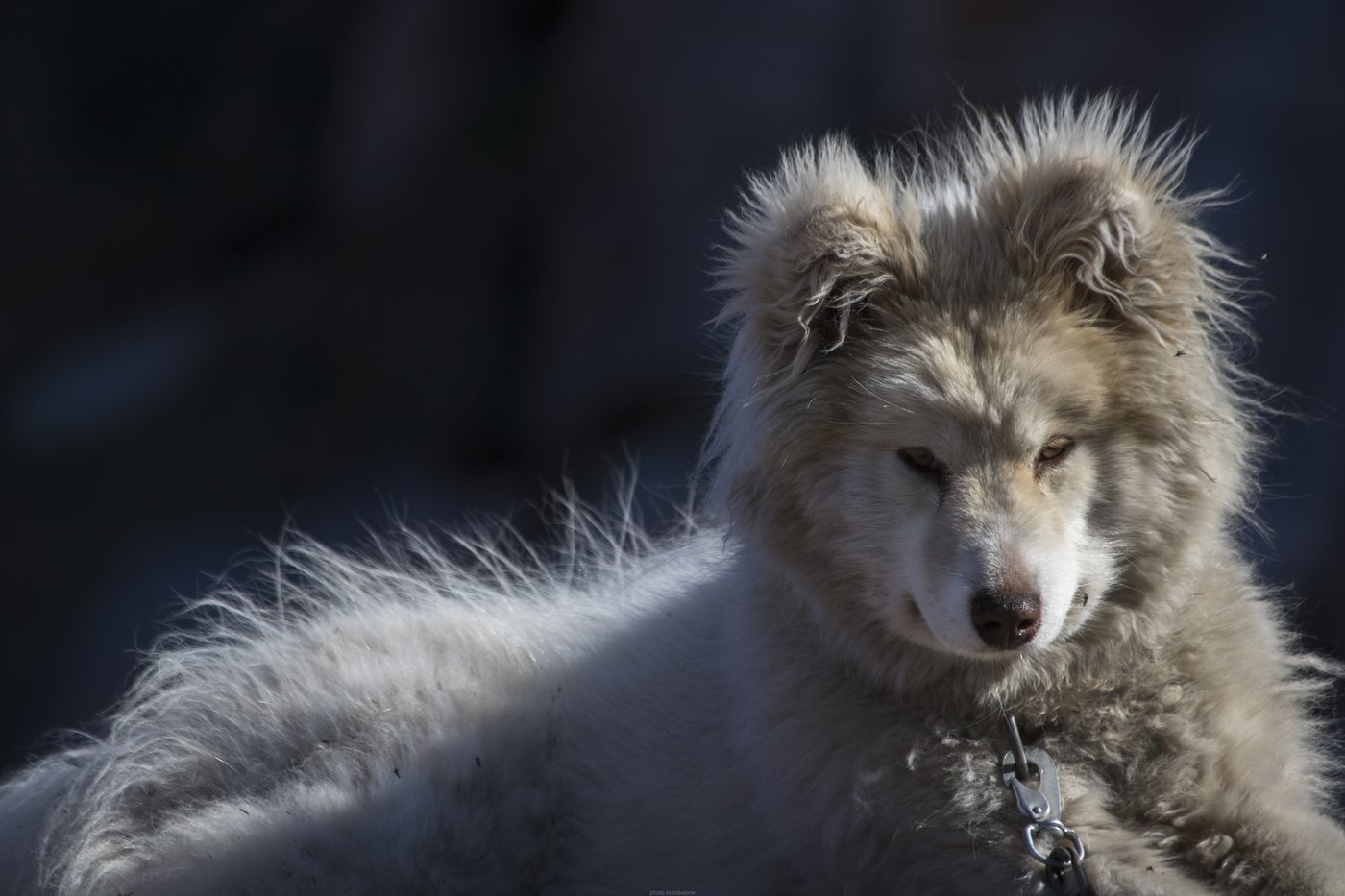
I met Étienne, a woodworker from the area, in L'Anse-Saint-Jean. Together we built the chalet where we live today — and in 2015, we welcomed Freya, our first Samoyed, whose white coat and gaze immediately brought to mind the winter landscapes my family had always talked about.
A Norwegian art form that decorates every corner of the chalet.
Rosemaling literally means "rose painting" in Norwegian: stylized floral motifs, scrollwork and swirls painted freehand, born in the 18th century on the farms of Telemark and Hallingdal.
The tulip — welcome
Painted on doors and trunks, it welcomes whoever walks in. Every puppy leaves with a small tulip painted on their health record.
The scroll — continuity
The swirl that curls without ever closing symbolizes the generations that carry on — from Solveig to Ingrid, and soon to our own children.
The rosette — protection
Painted above the kennel doors, it traditionally watches over the household — and, here, over every litter born within it.
"People sometimes ask me if painting and raising dogs have anything in common. I always give the same answer: both take the same patience — lay down a colour, wait for it to dry, come back the next day."
— Ingrid LindqvistThe smiling dog of the Nenets people.
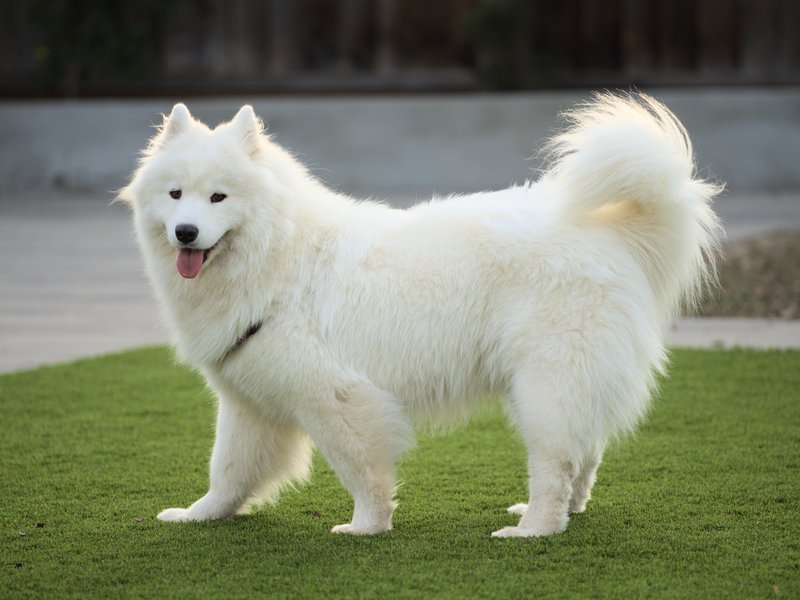
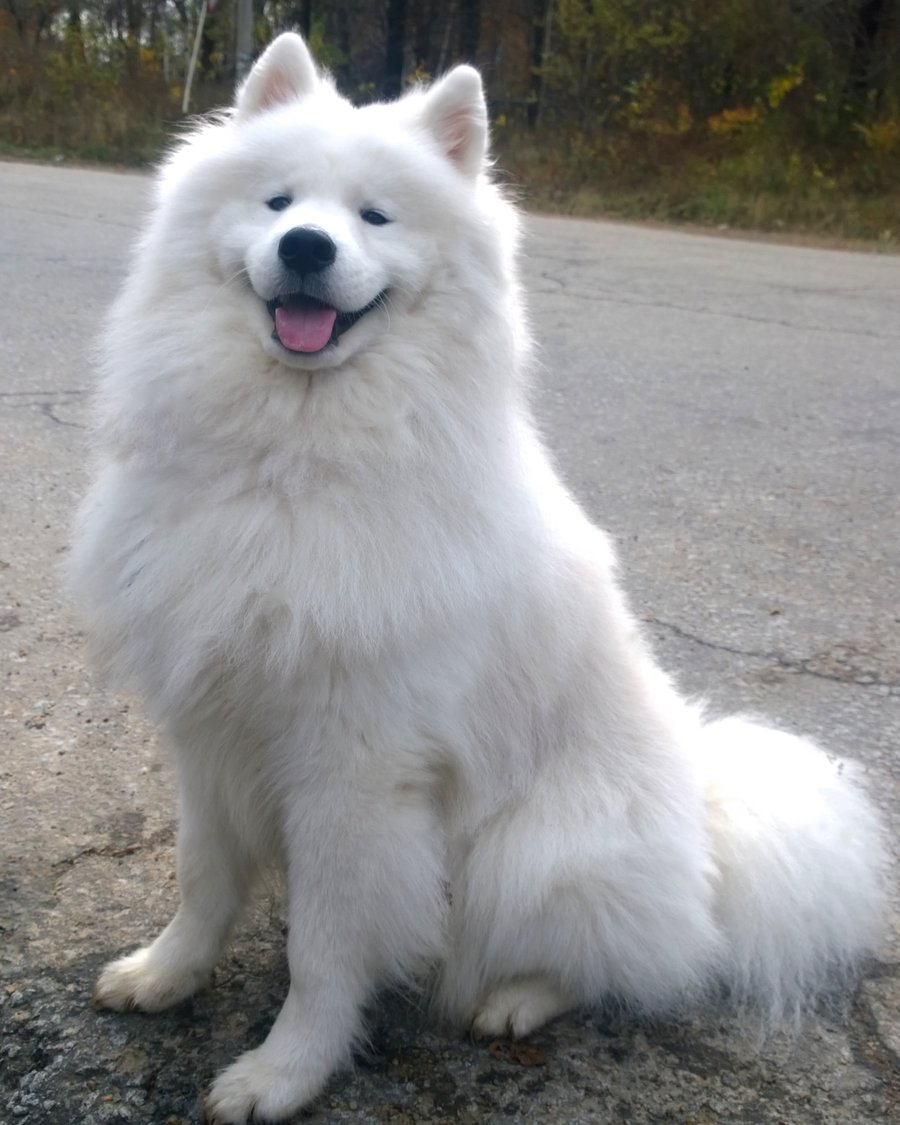
The Samoyed takes its name from the Nenets, a Siberian people who used it to herd reindeer, pull sleds and, at night, warm children under its coat. Its thick, white double coat protects it from extreme cold — exactly the kind we know here in the Saguenay.
Its best-known trait, the "Samoyed smile," isn't just an endearing expression: the upturned corners of its mouth keep saliva from freezing into icicles on its fur. In this breed, beauty always serves a purpose.
Good to know before adopting: the Samoyed sheds its undercoat heavily twice a year and needs regular brushing. It's a lively, sociable dog that gets bored — and lets you know it — if left alone too long.
What we screen for, and what we guarantee.
No mating takes place before Freya and Björn have passed the screening recommended for the breed. Certificates are handed to you directly, never just summarized.
Hips and elbows
X-rays evaluated by a recognized body, on both parents, before mating.
Eyes (CAER)
Annual ophthalmologic exam — progressive retinal atrophy is closely monitored in the Samoyed.
Genetic panel
DNA testing for hereditary conditions specific to the breed, run on every breeding dog.
Two-year guarantee against serious hereditary illness, provided in writing. Replacement or refund, your choice.
Come see the chalet before you decide.
We welcome families by appointment, even without a firm plan. You'll see the hand-painted room where the puppies are born, and meet Freya and Björn at work in the snow.
One piece of advice, even if you don't adopt from us: be wary of any breeder who refuses to show you where their dogs live. It's the most reliable red flag there is.